
Desperation
Janus:
– 17 April 2026 –
Janus:

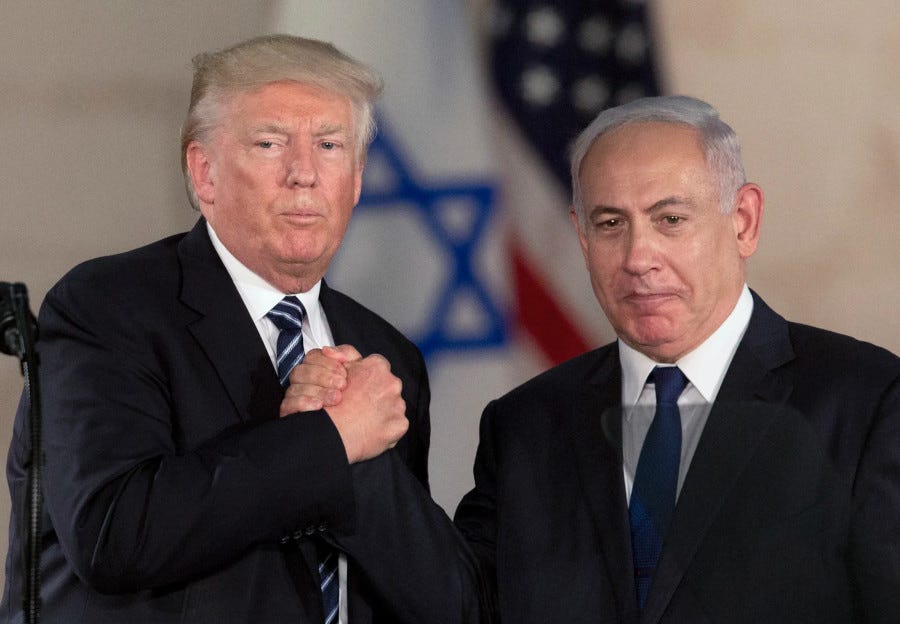
It’s difficult to make sense of what’s going on with the latest ceasefires in the Middle East, but overall it looks like underlying desperation for Israel and the United States, despite their aggressive bravado. After all, which side requested the end of hostilities?
Via the Daily Mail (“Celebrations in Lebanon as ceasefire with Israel goes into effect and Trump hails ‘historic’ peace effort with Iran: ‘Good things are happening!’” 17 Apr. 2026):
Massive celebrations swept through Lebanon as a 10-day ceasefire with Israel took effect on Friday, in what US President Donald Trump hailed as a ‘historic day.’
Trump announced the deal on Thursday after speaking with Israeli and Lebanese officials, noting that representatives from both countries met in Washington on Tuesday in the first diplomatic encounter in more than 30 years.
When the ceasefire then took effect on Friday, barrages of gunshots rang out across Beirut as residents fired their weapons into the air in celebration.
At the same time, displaced families started to return to their homes in southern Lebanon – leading to long car caravans clogging the roads as residents waved flags out the windows, according to The New York Times.
Lights and fireworks also illuminated the night sky.
As the celebrations continued, Trump took to his Truth Social page to tout the deal he helped broker.
‘May have been a historic day for Lebanon,’ the president wrote. ‘Good things are happening!!!’
The ceasefire between Israel and Lebanon marks a major stepping stone for the US to secure a peace deal with Iran, which has said it would not engage in a second round of peace talks with the US unless Israel entered into a ceasefire with Lebanon.
The Israeli government has previously said Hezbollah, an Iranian-backed militant group in Lebanon, was not included in the two-week ceasefire deal between the US, Israel and Iran, and strikes between the two countries have continued.
Yet the agreed-upon ceasefire remains fraught on Friday as Israeli officials vowed to keep its forces in southern Lebanon, saying they would attack if threatened, and Hezbollah said the Lebanese people have the ‘right to resist.’
[. . .]

Israeli Prime Minister Benjamin Netanyahu had said he agreed to the ceasefire ‘to advance’ peace efforts with Lebanon, but said Israeli troops would not withdraw.
Israeli forces have engaged in fierce battles with Hezbollah in the border area as they pushed into southern Lebanon to create what officials have called a ‘security zone.’ Netanyahu, in his video address, said it will extend six miles into Lebanon.

With great bombast on Trump’s part and snarling threats from Netanyahu, these Zionist forces are trying to back away from the wars they started without everyone seeing how desperate and ineffective they have become. They’ve run low on useful weapons supplies; they have failed to achieve any military objectives that they can sustain, and they have run low on options and leverage.
Can Israel continue to occupy southern Lebanon, considering their recent losses there (Express Tribune, “Hezbollah claims destroying nearly 100 Israeli Merkava tanks,” 27 Mar. 2026)? And considering their military attrition at home (Times of Israel, “Zamir said to warn cabinet that IDF will ‘collapse in on itself’ amid manpower shortage,” 27 Mar. 2026)?
Can the United States continue its naval activities in the region, considering the loss of its nearby bases and its strained supply chains (International Business Times, “‘They’re Hungry All the Time’: US Sailors’ Poor, Small Meals Near Iran Reveal a Crisis,” 17 April 2026)?

Both Israel and the United States don’t have what it takes to commit to a serious, long-term, existential war. They don’t have the supplies or the manpower or the collective will. So Trump and (less enthusiastically) Netanyahu are trying to back out while making it look like they’ve humbled their enemies and achieved major results.
It seems like Iran and its proxies, Hezbollah and the Houthi, are more or less cooperating with their enemies in this charade. Diplomats were lately throwing around the prosaic term “off-ramp,” as something Trump was desperate to do, and it seems like Iran is trying to make way for Trump to exit this ill-conceived war in some face-saving move that might grant the US and Israel a few crumbs that they can call victory. (Bravely running away again!)
This is looking very much like last year’s 12-Day War, only on a larger scale. In that war, Israel had attacked Iran and Iran surprised them by sending significant numbers of missiles that struck serious targets on Israeli soil, something that no Israeli enemy had ever systematically accomplished in recent history. Netanyahu demanded that Trump bail him out of a growing disaster, and Trump duly made much ado about sending two bombers to destroy Iran’s nuclear sites, but left it at that. Trump obnoxiously pretended to obliterate Iran’s nuclear capabilities (which were never really the issue), and everyone pretended this was serious.
For about six months!
Israel would try to destroy the Islamic Republic and their proxies again later. And now we’ve seen how that went! They tried and failed to stage a color revolution back in January. They killed off most of the Iranian leaders in the February 28 strikes. They tried and failed to stir up the Kurds whom they had betrayed in Syria. But the Islamic Republic still sent one barrage of missiles after another, the world economy began to teeter, and the Iranian government is more popular than ever.
So last week, Trump secretly begged for a ceasefire via Pakistan, trying to pull off the same stunt as in the 12-Day War.
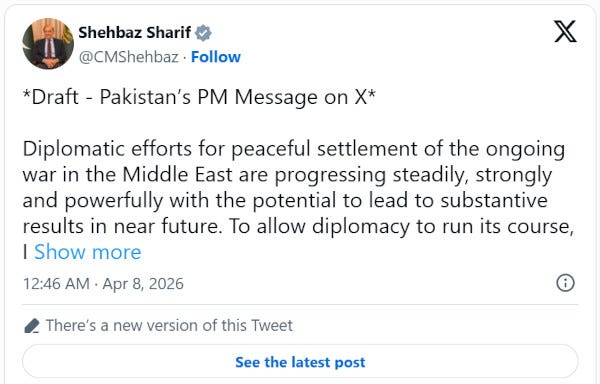
It seems like China secretly pressured Iran to accept this ceasefire, presumably for the sake of preventing its own economic destabilization. If Iran had refused China, it’s possible that they might have lost access to Chinese intelligence, targeting data, and other material support. Maybe that’s why Iran decided to play along with this second charade, even though they were clearly winning and the Zionists were running out of viable options short of weapons of mass destruction.
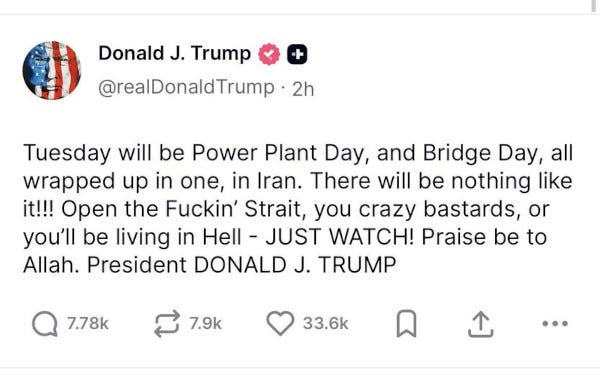
It’s interesting to speculate how events might have played out if Iran had refused to allow Trump to back out. Trump pretended to be crazy, promising to utterly destroy Iran’s electricity and bridges if “the crazy bastards” didn’t open the Strait of Hormuz.
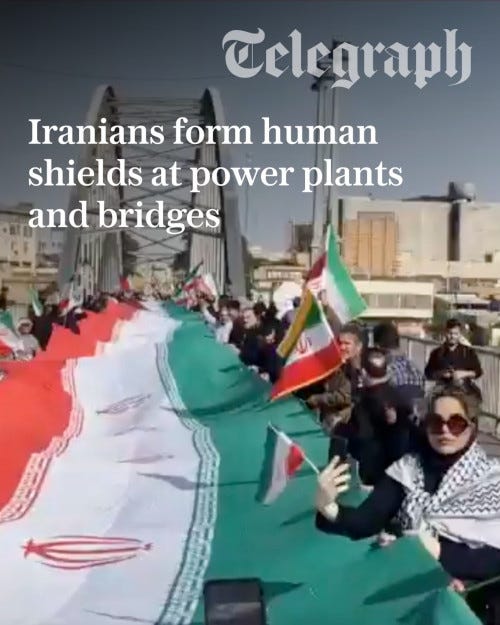
What if Iran had called Trump’s bluff? Their common people volunteered by the millions to form human shields over their power plants and bridges, forcing the US military to kill them if Trump delivered on these threats. Would he have actually ordered this? And what sort of retaliation would this justify for the Iranians to take on US military and economic assets? This would not have played out well for the United States and ultimately Israel.
In any case, Iran agreed to this desperate ceasefire request via Pakistan, and they have held to it despite several American and Israeli provocations. But this time Iran isn’t likely to settle merely for a return to the status quo like they did last year. At the very least, they want the removal of sanctions and for officially recognized control of the Strait of Hormuz, militarily and monetarily. They also currently demand the withdrawal of the United States military from the region, but it’s hard to imagine this becoming official, overt, face-losing policy (though it’s easy to imagine such a withdrawal in a de facto sense! Similar to the way we just left Syria [Military.com, “US Completes Withdrawal From Key Base in Syria as Part of a Larger Drawdown,” 16 Apr. 2026].)
So how will this “peace” turn out? Will some kind of peace agreement come out of it, or will this strange bombing war start up again, escalating in its stakes?
As far as lasting peace, we already know that the Israelis aren’t serious and can’t be trusted to hold to an agreement. They never follow even their own ceasefires. We also know that the Israelis effectively control the Trump administration and most of the US government. To what extent can Trump offer concessions that Netanyahu can pretend to stomach for the short term, till they/we can rearm? And for Iran’s part, how few concessions are they willing to accept for the sake of a peace agreement that is sure to prove temporary?
Then there are the larger, medium-term questions. How deep of a rift is growing between the right-wing Zionists and the ultra-liberal West, which could be seen in the recent NATO split over the Iran War (Newsweek, “Trump Floats Pulling US Troops From ‘Unhelpful’ NATO Countries,” 8 Apr. 2026) and with the loss of Victor Orban’s party in Hungary (NBC News, “Europe celebrates as Orbán’s stunning defeat deals a blow to Putin and Trump,” 13 Apr. 2026)? Could these divisions, along with exposed weaknesses of the US and Israel militaries, embolden Western rivals, such as Turkey? Will a more united, leftist European Union take a more aggressive stance against Russia? If the right-wing Zionists are getting desperate and isolated, both politically and militarily, how might they strike outward before they face losing power, which has been Netanyahu’s game for the past several years? Or is it possible that the enemies of the West will actually begin to take the initiative, pushing their advantage and forcing the West on the defensive?
One thing is certain: however these two Middle Eastern ceasefires play out, this overall smoldering world war that is driving all these conflicts isn’t even close to resolved yet. The world order remains unstable and fluid.